

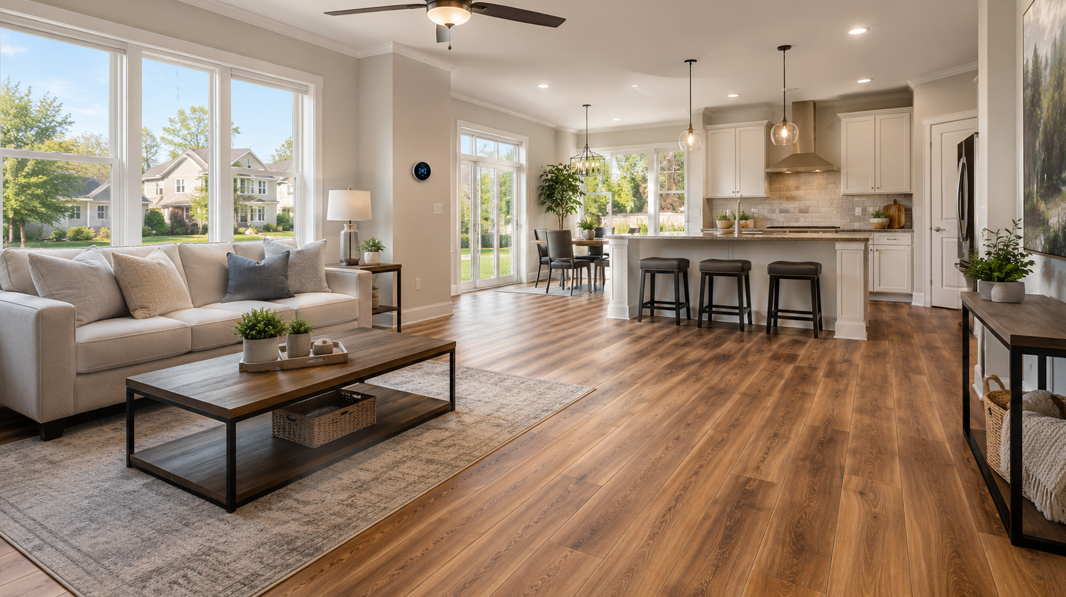
When homeowners in Brookfield, IL start thinking about lowering household costs, flooring may not be the first place they look. Heating and cooling equipment, insulation, windows, and air sealing usually have a much larger effect on energy use. Still, the surfaces underfoot can influence comfort, heat transfer, and how a room feels throughout the year.
That is where laminate flooring can play a supporting role.
Laminate is not a guaranteed way to cut an electric or gas bill, and no responsible flooring company can promise a specific amount of savings from a floor alone. However, the right laminate product, underlayment, installation, and room setup can contribute to a more comfortable interior and work well as part of a broader energy-conscious home plan.
For Brookfield homeowners considering a flooring update, NPN Flooring brings more than 27 years of flooring and carpentry experience to residential projects. Understanding how laminate interacts with indoor comfort can help you make a more informed choice rather than relying on exaggerated energy-saving claims.
Below are the practical ways laminate flooring may support comfort and household efficiency, along with the factors that matter most if utility costs are part of your decision.
Start With the Big Picture: Flooring Is Only One Part of Home Efficiency
Before connecting laminate flooring with utility bills, it helps to put flooring in context.
A home’s heating and cooling costs are shaped mainly by factors such as insulation, HVAC efficiency, air leakage, window performance, thermostat settings, outdoor temperatures, and household habits. Flooring can influence the way a room feels, but it does not replace those larger systems.
That distinction matters because a floor can feel warmer or more comfortable without producing a dramatic change in total energy consumption.
Comfort Can Affect How You Use Heating and Cooling
If a floor feels cold underfoot, homeowners may be tempted to raise the thermostat to make the room feel more comfortable. A surface that feels less cold can improve perceived comfort, especially in bedrooms, living rooms, and other spaces where people spend a lot of time.
Laminate can often feel more comfortable underfoot than some hard, dense surfaces. The exact result depends on the product, subfloor, underlayment, room temperature, and installation.
This does not mean laminate automatically lowers heating use. It means flooring can be one of several factors that influence how comfortable you feel at a given indoor temperature.
Think in Terms of a Whole-Room Upgrade
If you are renovating a room, consider flooring alongside:
Draft control
Window coverings
HVAC supply and return airflow
Insulation
Door seals
Lighting
Sun exposure
Furniture placement
A flooring project can be a good time to look at the room as a complete system rather than treating the floor as an isolated finish.
Laminate Can Feel Warmer Than Some Hard-Surface Floors
One of laminate flooring’s practical advantages is the way it can feel underfoot.
Tile and stone are popular for many reasons, but they can feel cool because of the way they absorb heat from your feet. Laminate has different material properties and is typically installed over an underlayment, so the surface may feel less cold in the same room conditions.
Why Surface Feel Matters
People respond to more than the thermostat reading. Floor temperature, air movement, humidity, sunlight, and the temperature of surrounding surfaces all affect comfort.
If the floor feels more comfortable, a room may feel more inviting without needing to make it noticeably warmer.
This can be particularly relevant in Brookfield during colder months, when homeowners spend more time indoors and may notice cool floors in rooms over certain subfloors or lower levels.
Underlayment Can Add Another Layer
Many laminate installations use an underlayment beneath the planks. Depending on the product, underlayment can serve several purposes, including sound control, minor subfloor smoothing, moisture management where appropriate, and added thermal resistance.
The amount of thermal benefit varies widely by underlayment type, so it is better to look at manufacturer specifications than assume every product performs the same way.
If energy-conscious comfort is one of your goals, ask how the laminate and underlayment work together as a complete flooring system.
Proper Installation Can Help the Floor Perform as Intended
A quality laminate product still needs proper installation.
Gaps, moisture problems, uneven subfloors, unsuitable underlayment, or incorrect expansion clearances can create performance issues that have little to do with the laminate itself.
A Stable Subfloor Matters
Laminate is installed over a subfloor, and the condition of that surface affects the finished result.
An uneven or damaged subfloor can contribute to movement, noise, or premature wear. In some cases, subfloor issues may also point to moisture or building-envelope concerns that deserve attention before new flooring goes down.
NPN Flooring offers subfloor repair and underlayment services in addition to residential installation, which can be helpful when a project needs more than a simple surface replacement.
Installation Details Help Protect Long-Term Value
The goal of professional installation is not to turn laminate into insulation. It is to make sure the flooring system performs the way the manufacturer intended.
That includes proper preparation, spacing, transitions, and compatible materials.
A floor that lasts and performs well can also protect the value of the renovation itself. Avoiding preventable repairs or early replacement is another practical way to keep long-term household costs under control.
Underlayment Can Support Thermal Comfort
Underlayment deserves special attention because it sits between the laminate and the subfloor.
Homeowners sometimes assume underlayment is only about sound, but some products also provide a modest insulating effect.
Look at the Product’s Thermal Properties
When comparing underlayment, review the manufacturer’s published thermal resistance or R-value when available.
A higher R-value generally means more resistance to heat flow. However, more is not always better. If the home uses radiant floor heating, an underlayment with too much resistance can slow heat transfer from the system into the room.
The best choice depends on the subfloor, laminate product, moisture conditions, and whether radiant heating is involved.
Avoid Choosing Underlayment by Thickness Alone
A thicker product is not automatically more energy efficient or more suitable.
Density, material, moisture characteristics, acoustic performance, and compatibility with the laminate all matter.
This is a good example of why flooring decisions benefit from product-specific guidance rather than one-size-fits-all advice.
Laminate Can Work With Some Radiant Heating Systems
Radiant floor heating warms a room from below, and some laminate products are designed to be compatible with certain radiant systems.
If your Brookfield home already has radiant heating, or you are planning a larger renovation that includes it, flooring compatibility becomes an important part of the design.
Compatibility Comes First
Not every laminate floor is approved for every radiant system.
The manufacturer may specify:
Maximum surface temperatures
Approved heating system types
Required underlayment
Subfloor preparation
Installation methods
Acclimation or operating instructions
Following those requirements helps protect both the floor and the heating system.
Efficient Heat Transfer Depends on the Whole Assembly
With radiant heating, the floor covering and underlayment affect how heat moves into the room. Lower thermal resistance generally allows heat to transfer more readily, but the correct combination depends on the specific system.
A properly designed radiant setup can provide comfortable, even heat, but any utility savings come from the overall heating design and operation, not from laminate alone.
If radiant heating is part of your project, choose laminate flooring that is specifically approved for the system you plan to use and follow the product guidance closely.
Laminate Can Support Zoned Comfort in Frequently Used Rooms
Energy-conscious homeowners often focus on making the rooms they use most feel comfortable rather than treating every part of the home exactly the same.
Flooring can support that approach by helping frequently used rooms feel finished, comfortable, and easier to live in.
Focus on High-Use Spaces
Think about where your household spends the most time:
Living rooms
Family rooms
Bedrooms
Home offices
Kitchens
Finished lower-level spaces
If a flooring update makes those rooms more comfortable, it may support a broader strategy that includes sensible thermostat settings, zoning, ceiling fans, or room-by-room HVAC adjustments.
Again, laminate itself does not create the energy savings. It can be part of a room design that makes targeted comfort easier.
Brookfield Seasons Make Flexibility Useful
Brookfield homes experience both cold winters and warm, humid summers. A floor that works well with year-round indoor conditions can be valuable because homeowners are not choosing for only one season.
Laminate offers a wide range of styles that can provide the visual warmth of wood while supporting practical day-to-day maintenance.
That combination can make it appealing in rooms where homeowners want both style and functional comfort.
A Durable Floor Can Reduce Replacement-Related Costs
Utility bills are only one part of household spending.
When evaluating flooring, it also makes sense to consider how long the floor is expected to perform under the conditions in your home.
A durable floor that is suitable for the room can help reduce the likelihood of premature replacement.
Choose a Product for the Actual Space
The right laminate for a quiet bedroom may not be the same product you would choose for a busy family room or entry area.
Consider:
Expected foot traffic
Pets
Furniture movement
Moisture exposure
Sunlight
Cleaning habits
Manufacturer wear ratings and warranties
Choosing for the actual room helps the flooring deliver better long-term value.
Protect the Surface After Installation
Routine habits can extend the useful life of the floor:
Use mats at exterior entrances.
Remove grit regularly.
Wipe spills promptly.
Use furniture pads.
Follow approved cleaning instructions.
Avoid excess standing water.
Protect the floor during renovation work.
These steps do not lower utility bills, but they can reduce unnecessary repair or replacement expenses, which matters when you are looking at the total cost of home ownership.
Lighter or Darker Laminate Can Affect How a Room Feels
Floor color does not change the efficiency of your HVAC system, but it can influence the visual atmosphere of a room.
That matters because comfort is partly psychological and visual.
Lighter Floors Can Make a Space Feel Brighter
Light wood-look laminate can help reflect available daylight around a room and may make smaller spaces feel more open.
In rooms with good natural light, that visual brightness can support an airy feel without relying entirely on decorative lighting during the day.
The actual electricity savings from flooring color alone would usually be minor and difficult to isolate, so it is better to think of this as a design benefit rather than an energy-saving guarantee.
Darker Floors Can Create Visual Warmth
Deeper brown, walnut, or charcoal tones can make a room feel grounded and cozy.
If your goal is to create a warm visual atmosphere, darker flooring can support that look alongside lighting, wall colors, rugs, and furniture.
The important point is that perceived comfort comes from the combined room design, not a single flooring feature.
Maintenance Can Help Preserve Performance and Appearance
A clean, well-maintained floor supports the value of the flooring investment.
Laminate is generally straightforward to care for, but seasonal conditions in Brookfield make consistent maintenance worthwhile.
Summer
During warm months:
Keep indoor humidity reasonably stable.
Wipe up moisture quickly.
Use mats at patio and exterior doors.
Control prolonged direct sunlight where practical.
Remove grit before it is tracked through the home.
Winter
During colder months:
Keep snow, slush, and road salt near entry areas.
Dry wet footwear and mats.
Avoid standing moisture.
Maintain a comfortable indoor environment.
Check busy entrances more frequently.
Year-Round
Use manufacturer-approved cleaning methods and avoid excessive water.
A consistent care routine helps the floor keep the appearance and performance that made it a worthwhile renovation in the first place.
Know What Laminate Can and Cannot Do for Utility Costs
The most useful way to think about laminate and energy costs is to separate realistic benefits from exaggerated claims.
Laminate May Help Support:
Comfortable surface feel
An underlayment system with modest thermal resistance
Compatibility with approved radiant heating systems
Comfortable high-use rooms as part of a zoning strategy
A bright or warm visual atmosphere depending on color
Long-term household value when the floor is chosen and maintained well
Laminate Does Not Replace:
Quality insulation
Efficient heating and cooling equipment
Air sealing
Energy-efficient windows
Proper ventilation
Good thermostat management
If high utility bills are the main concern, a flooring change by itself is unlikely to be the complete solution.
That does not make flooring irrelevant. It simply means the strongest results come from looking at the home as a system and making improvements where they have the greatest effect.
Make Laminate Part of a Smarter Brookfield Home Upgrade
Laminate flooring can contribute to a comfortable, attractive, and practical home, but its connection to utility savings needs to be understood realistically.
The floor may feel warmer than some dense hard surfaces, and a compatible underlayment can add modest thermal resistance. Certain laminate products can also work with approved radiant heating systems. Those qualities can support indoor comfort and fit into a broader energy-conscious renovation.
What laminate cannot do is guarantee a lower utility bill on its own.
For Brookfield homeowners, the strongest approach is to combine flooring choices with good insulation, sensible HVAC use, moisture control, air sealing, and other improvements that affect whole-home efficiency.
When choosing a laminate floor, consider:
The room’s year-round use
The subfloor condition
Underlayment compatibility
Indoor moisture conditions
Radiant heating requirements, if applicable
Durability needs
Manufacturer installation and care guidance
NPN Flooring has more than 27 years of experience helping families with flooring and carpentry projects, with services that include residential installation, subfloor repair, underlayment, flooring repairs, and free in-home estimates.
If you are considering laminate flooring as part of a Brookfield home update and want help choosing a product that fits your room, get in touch with NPN Flooring for personalized guidance.


