

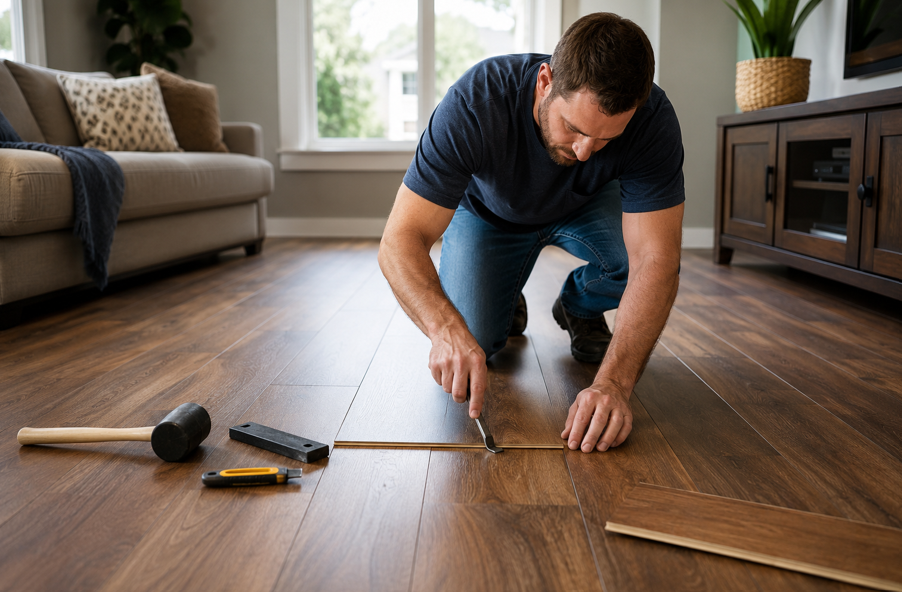
Laminate flooring is a practical, stylish, and durable choice for many Brookfield homes. It gives homeowners the warm look of wood with easy maintenance, strong everyday performance, and plenty of design flexibility. That makes it especially useful in busy family spaces, pet-friendly homes, hallways, kitchens, living rooms, and basements.
Still, even reliable flooring can show signs of daily life. A chair might leave a light scratch. A dropped object might chip the surface. Pet nails may create small scuffs near the hallway. Illinois weather can also play a role, especially when summer humidity, winter dryness, wet shoes, and seasonal changes affect the way flooring materials respond inside the home.
The good news is that not every mark means your floor needs to be replaced. Many laminate flooring issues can be improved with the right repair method, especially when the damage is caught early. The key is understanding what kind of issue you are dealing with before choosing a solution.
For homeowners looking for trusted local flooring guidance, NPN Flooring brings more than 27 years of flooring and carpentry experience to homes throughout Brookfield and the surrounding area. That experience matters because laminate flooring repair is not just about hiding a mark. It is about understanding the floor, the room, the product, and the cause of the problem.
This guide explains the most common laminate flooring problems in Brookfield homes, how to handle smaller repairs, when plank replacement may be the better option, and how to protect your floors from future damage.
Common Laminate Flooring Problems Homeowners Notice
Before repairing laminate flooring, it helps to identify the issue clearly. Different flooring problems need different repair approaches, and a surface scratch is very different from moisture-related swelling or plank movement.
One of the most common concerns is scratching. These marks often appear in high-traffic areas such as hallways, kitchens, entryways, and living rooms. Shoes, pet nails, toys, furniture legs, and small pieces of grit can all leave light marks on the surface.
Chips and small dents are also common. These usually happen when something heavy or sharp hits the floor. A dropped tool, a chair leg, or a piece of furniture can create a small damaged spot that stands out against the surrounding plank.
Gaps between planks may appear when flooring shifts slightly. This can happen because of seasonal expansion and contraction, dry indoor air during winter, installation movement, or heavy furniture pushing against the floor.
Raised edges, buckling, or lifting are more serious signs. These may point to moisture exposure, limited expansion space, subfloor movement, or installation-related concerns. If a plank is lifting or the floor feels uneven underfoot, the cause needs careful attention.
Some homeowners also notice soft spots or clicking sounds. These can happen when the subfloor is uneven, the underlayment is not supporting the floor properly, or planks are moving more than they should.
Discoloration can also appear over time. Direct sunlight, harsh cleaning products, or rugs that stay in the same place for years may cause one area of the floor to look different from another.
The main point is simple: repair starts with understanding the cause. A light scratch may only need a touch-up product, while swelling or lifting may require a closer look from a flooring professional.
Start by Assessing the Damage
Before buying a repair kit or trying to fix the floor, take a few minutes to assess the damage. This simple step can help you avoid using the wrong product or making the issue more noticeable.
Start by looking at the size of the damaged area. A tiny scratch near a chair leg is usually easier to address than several damaged planks in the middle of a living room. If the damage covers a wider section, there may be more going on than normal wear.
Next, check whether the damage is only on the surface. If the floor is still flat, firm, and dry, the issue may be cosmetic. Light scratches, small scuffs, and minor chips often fall into this category.
If the plank feels swollen, raised, soft, or uneven, the issue may go deeper. Moisture, subfloor conditions, or plank movement could be involved. These problems need more care because covering the surface will not solve the source of the issue.
It also helps to ask a few simple questions:
Is the problem in one spot or several areas?
Is the floor flat, or does it feel raised?
Is there any sign of moisture nearby?
Did the damage appear after moving furniture?
Is the issue getting larger over time?
Does the same problem keep coming back?
If the floor is scratched but level, it may be a simple surface repair. If a plank is swollen, moisture may be involved. If several planks are lifting, the floor may need a professional assessment. If the damage keeps returning, the cause may be below the surface.
A careful assessment helps you choose the right repair path and protect the long-term beauty of your flooring.
How to Fix Minor Scratches on Laminate Flooring
Minor scratches are one of the easiest laminate flooring concerns to notice. They often appear when furniture slides, pets run through the house, or grit from outside gets tracked across the floor.
Start by cleaning the area gently. Use a laminate-safe cleaner and a microfiber cloth to remove dust, dirt, and small particles. This matters because grit can make scratches worse if it is rubbed into the surface during the repair.
Once the area is clean and dry, look at the scratch in good lighting. If it is light and shallow, a laminate repair marker or color-matched touch-up pen may help it blend with the surrounding floor. These products are designed to fill or disguise small surface marks without changing the floor’s finish too much.
Choose a color that matches the flooring as closely as possible. If your floor has mixed tones, select the shade that matches the damaged part of the plank rather than the overall room. Testing the product in a less visible area is a smart way to make sure the color works before applying it to a noticeable spot.
For slightly more visible scratches, a manufacturer-approved repair kit may be a better option. Follow the instructions carefully, apply a small amount at a time, and avoid overworking the area.
Prevention is just as important as repair. Felt pads under chairs, entry mats near doors, regular sweeping, and trimmed pet nails can all help reduce surface damage. Simple habits can keep your floor looking beautiful for longer, especially in busy Brookfield homes where kids, pets, guests, and daily routines all bring extra activity across the floor.
How to Repair Chips, Dents, and Small Surface Damage
Chips, dents, and small gouges need a little more attention than light scratches. These marks often happen when something heavy falls on the floor or a sharp edge hits the surface.
Start by cleaning the damaged area. Remove dust, loose particles, and any small fragments from the chip. The area needs to be clean so the repair material can sit properly and blend more smoothly with the plank.
For many small chips, a color-matched repair filler can help improve the appearance of the damaged plank. Laminate floor repair putty, wax pencils, and filler products are commonly used for this kind of repair. The goal is to fill the damaged area, smooth it carefully, and help it blend with the surrounding surface.
Apply the filler slowly and avoid using too much at once. After placing the repair material into the chip, smooth the surface according to the product instructions. Wipe away any excess before it sets, and allow the area to dry or harden fully.
It is important to keep expectations realistic. A small chip can often be made much less noticeable, but a deep gouge may not disappear completely. This is especially true if the floor has a textured surface, wood-look grain, or varied color pattern.
If the damaged spot is in a highly visible area, such as the center of a living room, plank replacement may create a cleaner result. The same is true if the chip has damaged the locking edge of the plank or if several areas are affected.
Small surface repairs are useful when the damage is limited. Larger damage needs a more careful plan.
What to Do About Gaps Between Laminate Planks
Gaps between laminate planks can be frustrating because they interrupt the smooth, finished look of the floor. They may appear as thin lines between boards or wider spaces where planks have shifted apart.
In Brookfield homes, seasonal changes can play a role. Illinois winters can bring dry indoor air, while summer humidity can affect how flooring materials respond. Laminate flooring is designed to handle normal household conditions, but movement can still happen if the product, installation, subfloor, and room environment are not working together properly.
Gaps may be caused by seasonal expansion and contraction, improper acclimation before installation, uneven subfloors, installation movement, or heavy furniture pushing against the flooring. Sometimes the issue is isolated. Other times, it appears across multiple rows.
Small gaps may be adjusted depending on the floor’s locking system and condition. However, homeowners should avoid forcing planks together. If the plank is warped, tight, or uneven, too much pressure can damage the locking edges.
This is where material quality and installation detail matter. When a section is too damaged for a simple adjustment, choosing the right laminate flooring can help restore the look and performance of the room.
If a gap keeps returning, appears in several areas, or is paired with lifting or soft spots, it is worth having the floor inspected. The visible gap may only be a symptom. The actual cause could be subfloor movement, moisture, or expansion space that needs professional attention.
How to Handle Lifting, Buckling, or Raised Edges
Lifting, buckling, and raised edges are signs that your laminate flooring needs closer attention. These issues usually mean the floor is reacting to pressure, moisture, movement, or lack of proper expansion space.
A raised edge may look like one plank is sitting higher than the next. Buckling may cause several planks to push upward. In some cases, the floor may feel uneven or slightly bouncy underfoot.
Moisture is one of the most common causes. Spills, leaks, wet shoes, damp basements, and appliance issues can all allow water to reach the floor. Once moisture gets into the core of a laminate plank, the plank may swell or lose its original shape.
Another possible cause is limited expansion space. Laminate flooring needs room to respond naturally to indoor conditions. If the flooring is too tight against walls, cabinets, or fixed objects, pressure can build and cause lifting.
Heavy furniture can also restrict movement, especially if it pins down part of the floor. Poor subfloor preparation or uneven underlayment may create similar issues.
The first step is to identify whether moisture is involved. If there is active water exposure, that source needs to be addressed before any flooring repair can last. Damaged planks may need to be removed and replaced, especially if swelling has changed their shape.
It is also important to remember that laminate is not hardwood. It cannot usually be sanded and refinished in the same way. Trying to sand laminate can damage the wear layer and make the problem worse.
Raised or buckled flooring is best handled with a careful diagnosis. A professional can determine whether the issue is moisture, pressure, subfloor movement, or installation-related.
When a Damaged Plank Needs to Be Replaced
Not every laminate flooring problem can be solved with a touch-up product. Sometimes replacing the affected plank is the best way to restore the floor’s appearance and performance.
Plank replacement may be the better option when the plank is swollen from moisture, deeply gouged, cracked, broken, or unstable underfoot. It may also be needed when the locking edge is damaged or when a previous repair does not blend well with the rest of the floor.
Replacement is especially worth considering in highly visible spaces. A living room, kitchen, hallway, or entryway may benefit from a cleaner repair because these areas are seen every day.
The process is usually easier when homeowners have spare planks from the original installation. These planks are more likely to match the existing floor in color, width, finish, and texture. If there are no spare planks, a flooring professional may need to identify the closest available match.
This matching process can take experience. Laminate flooring designs vary by manufacturer, collection, plank size, surface texture, sheen, and color tone. Two products may look similar in photos but appear different once installed in the same room.
NPN Flooring’s 27+ years of flooring and carpentry experience can be valuable here. Careful workmanship matters because plank replacement is not only about removing damaged material. It is about restoring the floor in a way that looks natural, feels secure, and supports the long-term comfort of the home.
If several planks are damaged, the repair may need a broader plan. In some cases, replacing a section of flooring produces a more polished result than trying to patch multiple spots.
Moisture Damage: What Brookfield Homeowners Need to Know
Moisture is one of the biggest concerns for laminate flooring. While laminate is known for durability and easy maintenance, standing water or repeated moisture exposure can create problems over time.
Brookfield homes deal with plenty of seasonal moisture sources. Summer humidity, snowy winter shoes, rainy spring weather, wet entryways, kitchen spills, laundry areas, and basement conditions can all affect flooring if moisture sits too long.
A small spill that is wiped up quickly may not cause any issue. The concern starts when water reaches plank edges, sits on the surface, or seeps below the flooring. Once moisture reaches the core of a laminate plank, the plank may swell, lift, separate, or discolor.
Common signs of moisture damage include raised seams, swollen edges, bubbling, soft areas, color changes, and planks that no longer sit flat. If these signs appear near a sink, door, appliance, or basement wall, check for a moisture source nearby.
To help protect laminate flooring:
Wipe spills promptly.
Place mats near exterior doors.
Avoid soaking the floor while cleaning.
Use laminate-safe cleaning products.
Keep indoor humidity balanced.
Check for leaks near appliances and sinks.
Use proper underlayment where needed.
Moisture damage in one small area may be repairable with plank replacement. Moisture damage across several areas may point to a larger issue, such as subfloor moisture, repeated water exposure, or an installation concern.
Early action makes a difference. The sooner moisture-related damage is identified, the easier it is to choose the right repair approach and prevent the issue from spreading.
How to Prevent Future Laminate Flooring Damage
The best laminate flooring repair is the one you can prevent. With a few simple habits, Brookfield homeowners can protect their floors from scratches, chips, moisture, and everyday wear.
Start with furniture protection. Felt pads under chair legs, tables, sofas, and movable furniture can reduce scratches. Check these pads from time to time because they can collect grit or wear down.
When moving furniture, lift it instead of dragging it. Even a small side table can leave marks if it is pulled across the floor. For heavier pieces, use proper moving sliders designed for hard surface flooring.
Entry mats are also helpful. They reduce the amount of dirt, salt, moisture, and grit that gets tracked into the home. This is especially useful during snowy Illinois winters and rainy spring days.
Regular cleaning matters too. Dirt and grit can act like sandpaper when people walk over it. Sweeping, dust mopping, or vacuuming with a hard-floor setting can help protect the surface.
For pet-friendly homes, trimmed nails can reduce scratches. Area rugs or runners can also help protect busy paths where pets run or where family members walk throughout the day.
Cleaning habits make a big difference. Laminate floors do not need heavy water. A lightly damp mop and laminate-safe cleaner are usually better than soaking the floor. Spills should be wiped up quickly, especially near plank seams.
Seasonal habits are helpful as well. Keep indoor humidity as balanced as possible, especially during dry winters and humid summers. If you are renovating, painting, moving furniture, or bringing in contractors, cover the floor with breathable protective material and avoid taping directly to the laminate surface.
These small steps can help your laminate flooring stay beautiful, durable, and comfortable for years.
DIY Repair vs. Professional Laminate Flooring Repair
Some laminate flooring repairs are simple enough for homeowners to handle. Others are better left to an experienced flooring professional.
DIY repair may be suitable for light surface scratches, small scuffs, minor chips, and basic touch-ups with color-matched products. If the floor is flat, stable, and dry, a simple repair kit may improve the appearance of the damaged area.
DIY care is also helpful for prevention. Cleaning the floor properly, adding furniture pads, using mats, and protecting the surface during daily use can all make a noticeable difference.
Professional repair is the better option when the damage is more serious. Buckling, lifting, moisture damage, large gaps, multiple damaged planks, subfloor concerns, and recurring issues all need a closer look.
A flooring professional can help identify the actual cause of the problem. That is important because the visible damage may not tell the full story. A raised plank might be caused by moisture. A gap might be linked to seasonal movement or installation conditions. A soft area might point to the subfloor.
Professional support can also help with product matching. If a plank needs to be replaced, the right match can make the repair look more natural. This is especially valuable in open spaces where flooring is highly visible.
NPN Flooring’s customer-focused approach is also helpful when repair needs change. Clear communication, careful assessment, and agreement on the next step help homeowners feel informed throughout the process.
A small repair can be simple. A larger repair deserves the right plan. Knowing the difference can save time and protect the overall look of your home.
Repairing Laminate Flooring the Right Way
Laminate flooring is a strong, stylish, and practical choice for Brookfield homes, but it still benefits from proper care. Scratches, chips, gaps, lifting, and moisture damage can happen over time, especially in active households.
The right repair depends on the cause. Light scratches may only need a touch-up marker or repair kit. Small chips may improve with color-matched filler. Gaps may be related to seasonal movement or installation conditions. Buckling and raised edges may need a more detailed inspection, especially if moisture is involved.
Prevention also plays a major role. Felt pads, entry mats, quick spill cleanup, pet nail care, balanced humidity, and smart cleaning habits can all help protect laminate flooring from future damage.
If you are unsure whether your floor needs a simple surface repair, plank replacement, or a professional assessment, get in touch with the NPN Flooring team. A knowledgeable local flooring expert can help you understand the issue and choose a repair approach that supports a beautiful, long-lasting result.


