

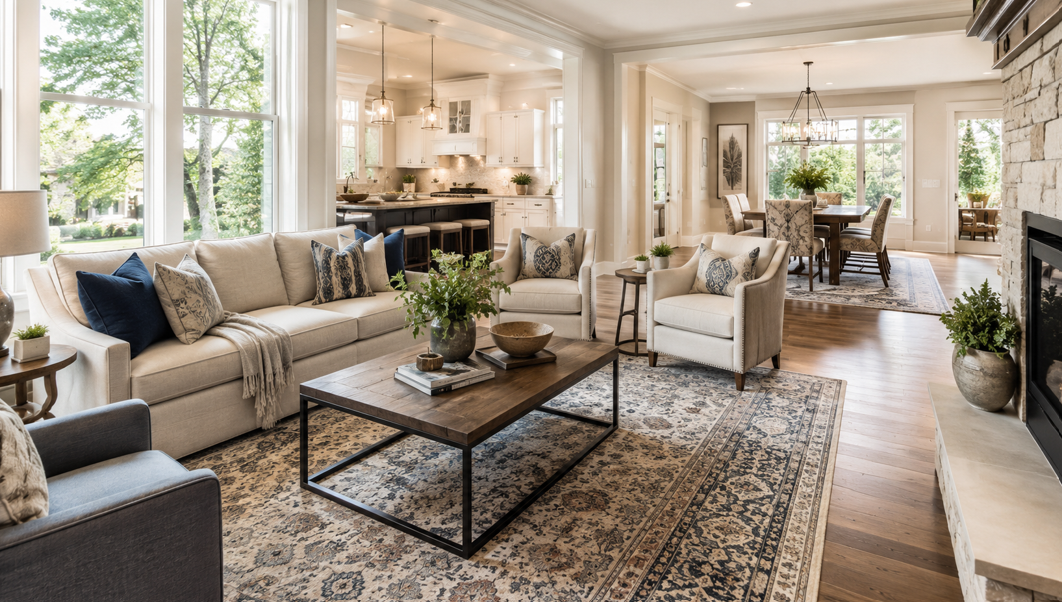
Choosing an area rug often starts with a simple question: “Will this actually work in my room?” A rug may look great on its own, but once you picture it beside your sofa, flooring, wall color, curtains, and artwork, the decision can feel less obvious.
The good news is that matching a rug to your interior design does not require every element to be identical. The best rooms usually feel coordinated rather than perfectly matched. A well-chosen rug can pull colors together, soften hard surfaces, add texture, and give furniture a stronger sense of place.
For homeowners in Brookfield, IL, NPN Flooring brings more than 27 years of flooring and carpentry experience to projects where every detail matters. That practical experience can help when you are choosing a rug that looks right and works with the way your household uses the space.
This guide covers the main design decisions that make rug selection easier, from color and pattern to furniture, flooring, texture, and room function.
Start With the Interior Style You Already Have
A rug can be beautiful on its own and still feel disconnected once it is placed in the room. A better starting point is the interior you already have.
Identify the Overall Look
Look at the main visual cues in the room. Is the furniture clean-lined and contemporary? Does the space lean more traditional, with warm wood tones and classic details? Maybe your home mixes newer finishes with older pieces, creating a transitional or eclectic look.
You do not need a formal design label. The goal is simply to notice the character that is already present.
For example:
A traditional room may pair well with warmer colors, classic motifs, or more detailed patterns.
A contemporary space may benefit from cleaner lines, subtle textures, or geometric designs.
A minimal room can handle a quiet neutral rug or one carefully chosen statement pattern.
An eclectic room often works best when the rug repeats at least one color or texture already found elsewhere.
Decide Whether the Rug Will Blend or Stand Out
A rug that blends into the room may repeat colors already found in the upholstery, curtains, or flooring, creating a calm effect. A rug that stands out can act as a focal point, especially when the rest of the room is understated.
The key is intention. If the sofa, artwork, curtains, and rug all compete for attention, the room can feel visually crowded. If one or two elements lead and the rest support them, the design usually feels more balanced.
Look at the Room as a Whole
Before settling on a rug, step back and consider the full space.
Pay attention to:
Flooring color and grain
Sofa and chair upholstery
Wall color
Window treatments
Wood or metal finishes
Artwork
Lighting
Major accessories
The rug does not need to match every one of these elements. It simply needs to help them feel like they belong in the same room.
Build the Rug Color Around the Room’s Existing Palette
Color is often the quickest way to connect an area rug with an existing interior. Start by identifying the colors that already repeat throughout the room.
Find Two or Three Existing Colors
Look for colors that appear more than once. A soft blue might show up in artwork and throw pillows. Warm brown may be present in the flooring and furniture legs. Cream might appear in curtains, upholstery, and trim.
Those repeated colors give you a natural starting point.
A rug can pick up one dominant color and one or two secondary colors without copying them exactly. Small variations in tone often make a room feel more layered and less overly coordinated.
For example, a room with beige upholstery and warm wood flooring might pair nicely with a rug that includes cream, muted green, rust, or soft brown. A space with cooler gray flooring may work better with slate blue, charcoal, ivory, or other cooler tones.
Use Neutrals to Calm a Colorful Room
If the room already contains strong color through furniture, artwork, or accessories, a neutral rug can create visual breathing room.
Cream, taupe, beige, gray, brown, and other adaptable shades can help anchor the room without adding another competing element.
Neutral does not have to mean plain. A rug can stay within a neutral palette while still adding depth through pattern, texture, or variation in tone.
Use Color to Add Personality to a Neutral Room
If your walls, flooring, and furniture are mostly neutral, the rug can introduce personality without requiring a permanent change. Muted blue, terracotta, green, navy, or warm rust can give the room more character while still working with a broad range of furniture and finishes.
The best color choice is not necessarily the boldest or most fashionable one. It is the one that feels natural beside the room’s permanent features.
Check the Rug in Different Light
Lighting can change how color appears.
A rug that looks cool and crisp in bright daylight may appear warmer in the evening. Likewise, deeper tones can feel richer in dimmer spaces.
If possible, consider how the rug color interacts with both natural and artificial light. This is especially helpful in rooms that look very different in the morning than they do at night.
Match the Rug With Your Flooring and Furniture
Flooring and furniture are two of the largest visual elements in any room, so consider both when choosing a rug.
Work With the Flooring Underneath
A rug is not replacing the floor beneath it. It is working with it.
Hardwood, laminate, luxury vinyl, tile, and other hard-surface floors all create a visual background for the rug. The more noticeable the flooring color or grain, the more useful it becomes to think about contrast.
A rug that is too close to the exact color of the floor can visually disappear. A little contrast helps define both surfaces.
For example:
A lighter rug can brighten a room with dark wood flooring.
A deeper rug can add definition over pale flooring.
A muted patterned rug can break up a large expanse of uniform flooring.
A simpler rug can balance flooring with strong grain or movement.
If you are comparing colors, textures, and design options, exploring different area rugs can help you see how varied the possibilities are.
Consider the Visual Weight of Furniture
Large furniture affects how a rug feels in the room.
A dark sectional, heavy wood coffee table, or oversized entertainment unit already carries a lot of visual weight. In that setting, a lighter or more restrained rug can help keep the space from feeling too heavy.
Lighter furniture gives you more flexibility. You may be able to introduce stronger pattern, deeper color, or more texture without overwhelming the room.
Coordinate Rather Than Match
Exact matching often looks less natural than coordination.
Instead of trying to find a rug that is the same color as the sofa, look for a relationship between the two. That relationship might come from:
Similar undertones
Repeated accent colors
Complementary warm or cool shades
Related textures
A shared level of formality
A navy sofa, for instance, does not require a navy rug. A rug with cream, muted blue, warm gray, or subtle navy accents may create a more interesting result.
Keep Permanent Features in Mind
Rugs are easier to change than many other parts of a room, so it makes sense to coordinate them with features that are likely to remain in place.
That includes flooring, cabinetry, built-ins, fireplace surrounds, large furniture, and major wood finishes.
When those elements form the foundation of the design, smaller accessories can change over time without making the rug feel out of place.
Choose Pattern and Texture Without Overloading the Room
Pattern and texture can transform a space by adding personality, softness, and contrast. The key is balance.
When a Patterned Rug Works Well
A patterned rug can be especially effective in a room with mostly solid-color furniture and simple finishes.
If your sofa, walls, and curtains are understated, the rug can introduce visual interest without competing with other features.
Geometric patterns can suit contemporary rooms. Traditional motifs can add richness to classic spaces. Organic or abstract designs can help soften modern interiors.
The exact style matters less than the overall balance.
When a Simpler Rug May Work Better
If the room already includes patterned upholstery, bold curtains, detailed wallpaper, or strong artwork, a quieter rug may give the design more room to breathe.
That does not mean the rug needs to be flat or plain. A subtle pattern or textured weave can still add depth without becoming another dominant feature.
Mix Pattern Scales
When several patterns appear in one room, varying their scale often creates better balance.
For example, a sofa with a small, tight pattern may pair more naturally with a rug that has a larger, more open design. Two highly detailed patterns of similar scale can compete with each other.
Think of pattern as part of the room’s rhythm. Some areas can be active, while others stay calmer.
Use Texture as a Design Tool
Texture matters because rooms are not experienced visually alone.
A room filled with wood, tile, glass, or metal can feel more inviting when a rug introduces softness. A room with heavily textured upholstery, layered pillows, and soft window treatments may benefit from a cleaner, lower-profile rug.
Texture can help a space feel warm, polished, relaxed, or refined depending on the look you are creating.
Match the Rug to the Room You Are Designing
A rug that works beautifully in one room may not create the same effect in another. The room’s purpose changes the way color, pattern, texture, and furniture work together.
Living Room
In a living room, the rug often acts as the visual foundation for the seating area.
Look at the sofa, chairs, coffee table, fireplace, media unit, and nearby flooring. The rug can connect those elements by repeating one or two colors while adding a texture or pattern that gives the space more depth.
If the room already has a statement sofa, dramatic artwork, or a detailed fireplace, a more restrained rug may support the design nicely. If the room feels plain or unfinished, the rug can carry more personality.
Dining Room
Dining rooms often have several strong surfaces competing for attention, including the table, chairs, flooring, cabinetry, and light fixtures.
A rug can help bring those materials together.
For a dark wood table over light flooring, a rug with medium tones can create a natural visual bridge. If the dining furniture is simple and neutral, a stronger pattern can add interest.
In open layouts, it also helps to consider what is visible from nearby rooms. The dining rug does not need to match the living room rug, but the two can share a color family, tone, or overall level of formality.
Bedroom
Bedrooms usually benefit from a more restful visual approach, though personal style always comes first.
Look at the bedding, headboard, wall color, curtains, and furniture finishes. A rug can soften the room while reinforcing the color palette.
If the bedding already uses several patterns, a simpler rug can support it. If the bedroom is mostly neutral, a rug can bring in a gentle pattern or a richer accent color without making the space feel busy.
Open-Concept Areas
In an open-concept layout, rugs can help different zones feel intentional while still keeping the overall design connected.
The living area and dining area, for example, can use different rugs that share one color or similar undertones. This gives each zone its own identity without creating a disconnected look.
The goal is flow, not duplication.
Avoid Common Rug-and-Décor Matching Mistakes
A few simple adjustments can make the difference between a rug that feels “almost right” and one that truly finishes the room.
Matching Everything Too Closely
If the sofa, curtains, pillows, and rug all use the exact same color, the room can lose depth.
A more natural approach is to work with related shades. Think cream with beige, navy with muted blue, or warm brown with rust.
Ignoring the Flooring
The floor is part of the room’s color palette whether it is mostly visible or partly covered.
A rug that works with the furniture but clashes with the floor can still feel disconnected. Always view those two surfaces together.
Adding Too Many Competing Patterns
Pattern can add character, but too many dominant patterns create visual noise.
If one feature is bold, let another one stay quieter.
Forgetting the Mood of the Room
A bright, energetic family room and a calm bedroom call for different design choices.
Think about how you want the space to feel before deciding how much color, contrast, or pattern the rug needs.
Following a Trend That Does Not Fit Your Home
Inspiration can be useful, but a popular rug style is not automatically the right fit for your room.
Your flooring, furniture, architecture, and personal taste matter more than a short-term trend. A rug that feels connected to your home can stay appealing long after a trend fades.
Forgetting Everyday Use
Good design also reflects how the room functions.
A rug in a busy family space needs to make sense for the way people move, gather, and live there. A rug in a formal room may have a very different role.
The best design choices support both the look of the room and the way it is used.
Bring the Whole Look Together With Confidence
Matching an area rug with your Brookfield home’s interior design is less about following rigid decorating rules and more about creating balance.
Start with the room you already have. Look at the flooring, furniture, colors, textures, patterns, lighting, and overall mood. Then choose a rug that strengthens those relationships rather than competing with them.
Before making a final decision, ask:
Does the rug connect with at least one or two colors already in the room?
Does it create enough contrast with the flooring to remain visually distinct?
Does the pattern work with the other patterns in the space?
Does the texture complement the furniture and hard surfaces?
Does the style fit the mood you want the room to have?
Does it make sense for the way the room is used every day?
NPN Flooring has more than 27 years of experience helping families with flooring and carpentry services, with a focus on quality workmanship, personalized service, and careful attention to each project. The team also offers custom area rugs, area rug binding, carpet binding, flooring repairs, residential installation, and free in-home estimates for Brookfield-area homeowners.
If you want help finding a rug that works with your flooring, furniture, and overall design, get in touch with NPN Flooring to discuss options for your home.


