

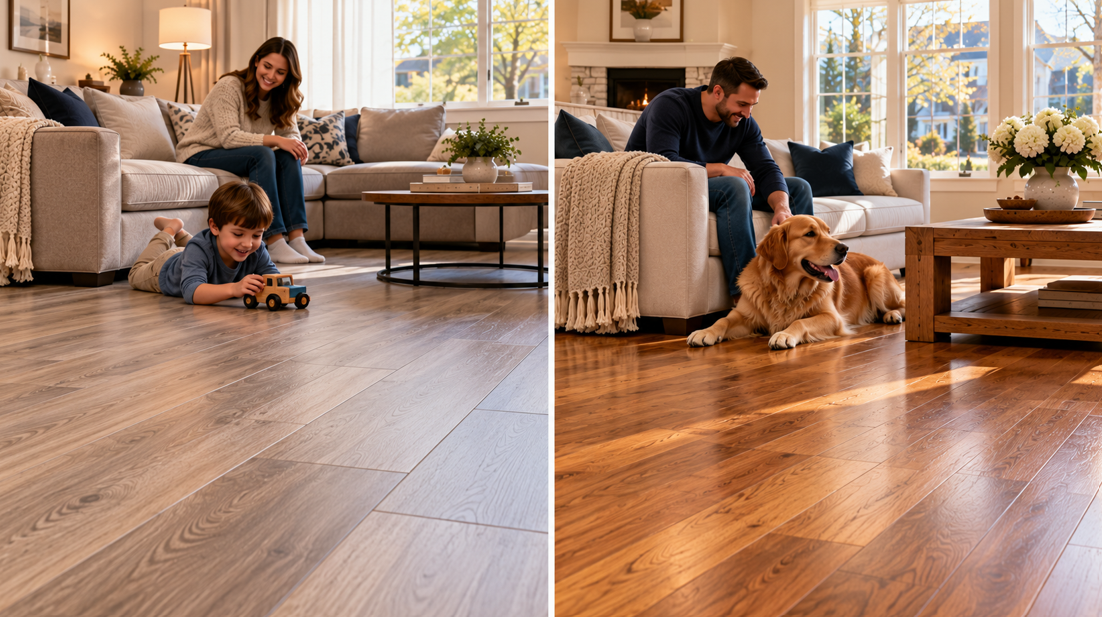
Choosing between laminate and hardwood is one of the biggest decisions in any flooring project. Both bring the warmth and character of wood into a home, yet they differ in cost, durability, care and long-term value. For Bolingbrook families balancing busy schedules, pets and Chicagoland weather, the right answer depends on how each room is used.
At NPN Flooring, we install both laminate and hardwood, and we have helped homeowners across the western suburbs make this choice for more than 27 years. This side-by-side guide breaks down the key differences so you can decide with confidence.
What Each Floor Is Made Of
Hardwood is solid wood, or a real wood veneer over a plywood base in the case of engineered hardwood. Every board has natural grain and color variation, and solid hardwood can be sanded and refinished several times over its life.
Laminate is a multi-layer product with a dense core, a high-resolution photographic layer that replicates wood grain, and a clear, tough wear layer on top. Modern laminate looks remarkably realistic, with embossed textures that mimic real boards.
Appearance and Style
Hardwood offers authentic depth and character that many homeowners love, and it tends to develop a rich patina over time. It also suits classic and traditional interiors beautifully.
Laminate has come a long way. Today's products offer wide planks, varied board patterns and finishes from light Scandinavian oak to deep walnut. In many Bolingbrook homes with contemporary layouts, laminate delivers a stylish look that most guests would never guess is not wood.
Durability and Everyday Wear
This is where the two floors differ most.
Scratches and Dents
Laminate's wear layer is highly scratch resistant, making it a great fit for homes with dogs, cats and young kids. Hardwood is softer and can scratch or dent from pet claws, dropped toys and furniture legs, though refinishing can restore it later.
Moisture
Neither floor loves standing water, but many newer laminate lines are water resistant or waterproof, offering extra protection in kitchens, mudrooms and basements. Hardwood can cup or warp if it is exposed to moisture for too long.
Seasonal Changes
Bolingbrook sees humid summers and dry winter air when the furnace runs. Hardwood naturally expands and contracts with these shifts, which can lead to small gaps in winter. Laminate is generally more stable, though proper acclimation and installation still matter.
Cost and Value
Laminate is typically the more budget-friendly choice, both for materials and installation. That makes it an affordable solution for large areas, rental properties or busy family spaces.
Hardwood usually costs more up front, but it can be refinished several times and is often viewed as a premium feature by home buyers. If you plan to stay in your home for decades, or you want to appeal to buyers who prioritize real wood, hardwood can be a worthwhile investment.
For a closer look at styles and finishes, explore our laminate flooring collection.
Installation Differences
Laminate usually installs as a floating floor, where boards click together over an underlayment. It can go over many existing subfloors and is often faster to install.
Hardwood is typically nailed or stapled to a wood subfloor, while engineered hardwood can be glued or floated. Installation takes more time and care, especially in older homes with uneven subfloors.
NPN Flooring handles subfloor repairs, underlayment and furniture removal, and our owners are present on every job site. Our transparent change control process means there are no surprises along the way.
Care and Maintenance
Laminate care:
Sweep or vacuum regularly to remove grit.
Use a damp mop with a laminate-safe cleaner.
Wipe spills promptly.
Use felt pads under furniture.
Hardwood care:
Sweep or vacuum often, especially in winter when road salt gets tracked inside.
Use a cleaner made for wood floors and avoid excess water.
Keep indoor humidity steady with a humidifier during dry months.
Plan for periodic refinishing to refresh the surface.
NPN Flooring also offers hardwood sanding, refinishing and restoration, so existing hardwood floors can be brought back to life rather than replaced.
Which Floor Fits Each Room?
Here is a quick room-by-room guide:
Kitchens: Water-resistant laminate is practical for spills and heavy traffic.
Living and dining rooms: Either works. Hardwood adds classic appeal, while laminate offers durability for active families.
Bedrooms: Hardwood brings warmth and character, especially paired with an area rug.
Basements: Laminate with a moisture barrier is the stronger choice. Solid hardwood is not recommended below grade.
Mudrooms and entries: Laminate or tile handles snow, slush and salt better.
Homes with pets: Laminate's scratch resistance is a big advantage.
Making the Decision
Many homeowners end up choosing both. A common approach is hardwood in the main living areas and bedrooms, with laminate in the kitchen, mudroom and finished basement where moisture and wear are higher.
Ask yourself a few questions:
How long do you plan to stay in the home?
How active is your household with kids and pets?
What is your budget for materials and installation?
Is resale appeal a top priority?
If durability and value lead your list, laminate is likely the winner. If authenticity and long-term refinishing potential matter most, hardwood may be the better fit.
Find the Right Floor for Your Bolingbrook Home
There is no single right answer in the laminate versus hardwood debate. The best choice is the one that fits your lifestyle, your budget and the way each room is used. Our in-house design consultants can show you samples of both and help you compare them in your own lighting.
NPN Flooring offers free in-home estimates, same-day appointments when available and a Brookfield showroom at 9311 Ogden Ave, open by appointment. Call or text (630) 206-3173 with any questions. Contact our team to start planning your new floors today.


