

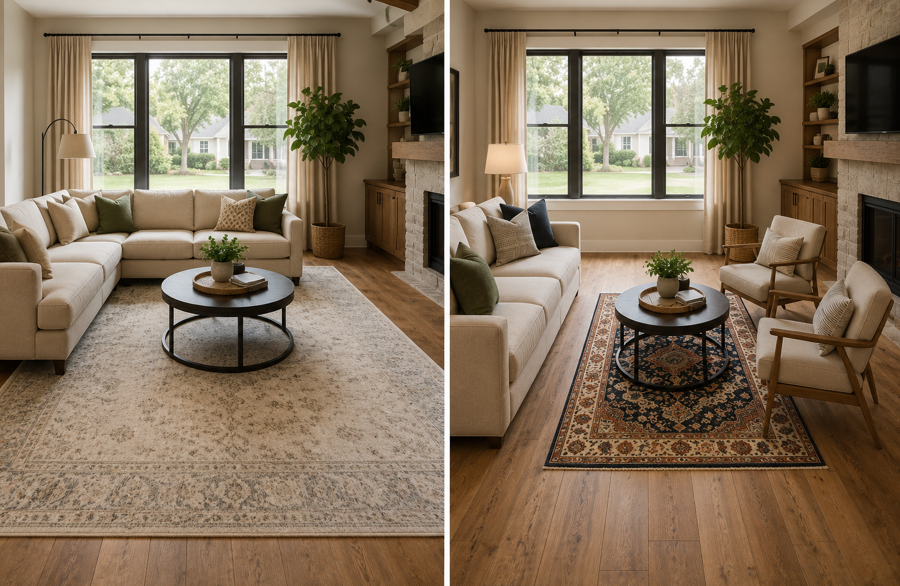
Choosing the right area rug size can completely change how a room feels. Go too small, and the space may look unfinished. Go too large, and the room may feel crowded or visually heavy. The right rug size brings everything together, helping your furniture, flooring, colors, and layout feel more intentional.
For Brookfield homeowners, area rugs are more than a finishing touch. They add comfort during cold Illinois winters, soften busy family spaces, protect hard surface floors, reduce noise, and bring warmth into living rooms, bedrooms, dining rooms, and open-concept layouts. Whether you live in a classic Brookfield bungalow, a larger family home, or a newly updated space, the size of your rug can affect both the look and function of the room.
For homeowners who want trusted local flooring guidance, NPN Flooring brings more than 27 years of flooring and carpentry experience to homes throughout Brookfield and the surrounding area. That experience matters because rug sizing is not only about picking a pretty design. It is about understanding proportion, traffic flow, furniture placement, floor protection, and the way your family uses each room every day.
So, should you go large or small with your area rugs? The answer depends on the room, the furniture, the floor plan, and the feeling you want to create. This guide compares large and small area rugs so you can make a confident choice for your Brookfield home.
Why Area Rug Size Matters More Than You Think
Area rug size has a bigger impact than many homeowners expect. A rug can define a space, frame a furniture arrangement, add color, introduce texture, and make a room feel more complete. But when the size is off, the room can feel disconnected.
A small rug in a large living room may make the furniture look like it is floating without a clear anchor. A rug that is too large for a narrow room may cover too much flooring and make the space feel packed. The right size creates balance.
Rug size also affects comfort. A larger rug can make a seating area feel softer and more inviting. This is especially helpful in Brookfield homes during colder months, when hard flooring may feel cooler underfoot. In bedrooms, a properly sized rug can make the first step out of bed feel warmer and more comfortable.
Function matters too. In high-traffic rooms, a rug can help protect flooring from wear. In dining rooms, the rug needs to be large enough for chairs to move in and out without catching on the edge. In hallways and entryways, the rug needs to fit the space without becoming a tripping concern.
Size also plays a role in sound control. Larger rugs can help absorb noise in busy households, especially in rooms with hard flooring, open layouts, or high ceilings. For families with kids, pets, and guests, this can make the home feel more comfortable and settled.
The goal is not simply to choose the biggest rug possible or the smallest rug that fits the budget. The goal is to choose the size that supports the room’s layout, comfort, and everyday use.
When a Large Area Rug Works Best
A large area rug works best when you want to create a complete, grounded, and polished look. It can make a room feel more connected by bringing furniture pieces into one defined zone.
In a living room, a large rug is often the better choice when you have a sofa, chairs, coffee table, and side tables arranged together. Ideally, at least the front legs of the main furniture pieces should sit on the rug. This helps the seating area feel unified instead of scattered.
A large rug is also useful in open-concept homes. If your living room flows into a dining area or kitchen, a large rug can visually separate the seating area without adding walls or dividers. This is especially helpful in modern Brookfield homes where one large room may need to serve several purposes.
In bedrooms, a larger rug can create a soft, comfortable frame around the bed. It can extend beyond both sides and the foot of the bed, making the room feel warmer and more finished. This works particularly well in primary bedrooms where comfort and visual balance are important.
Large rugs also help protect more of the flooring surface. If you have hardwood, laminate, or luxury vinyl underneath, a larger rug can reduce everyday wear in busy areas. This can be valuable in family rooms, playrooms, and spaces where pets frequently walk or rest.
Another benefit is sound control. The more floor area a rug covers, the more it can help soften noise. In homes with kids, pets, or open living areas, this added softness can make the space feel calmer.
A large rug is a strong choice when your goal is comfort, warmth, and a high-end finished look.
When a Small Area Rug Makes More Sense
A small area rug can be the right choice when you want flexibility, visual breathing room, or a decorative accent without covering too much of the floor.
Small rugs work well in compact spaces. In a narrow entryway, small sitting area, reading nook, or beside a bed, a smaller rug can add comfort and style without overwhelming the room. It can introduce color or pattern while still allowing the surrounding flooring to remain visible.
Small rugs are also useful when you want to highlight beautiful flooring. If your Brookfield home has hardwood, laminate, tile, or another stylish floor surface, you may not want to cover it completely. A smaller rug can add softness while still letting the flooring remain part of the design.
Another advantage is flexibility. Smaller rugs are easier to move, clean, rotate, and replace. This can be helpful in homes with pets, kids, or seasonal design changes. You might use a lighter rug in summer and a warmer, thicker rug in winter.
Small rugs also work well as accent pieces. A bold pattern or rich color may feel too strong as a large rug, but it can look beautiful in a smaller size. This makes small rugs useful for adding personality without taking over the room.
In some cases, a small rug can define a very specific zone. For example, it can sit under a small coffee table, beside a reading chair, near a kitchen sink, or at the foot of a bed. These placements add comfort exactly where it is needed.
A small rug is a smart choice when you want style, flexibility, and targeted comfort without changing the entire feel of the room.
Large vs. Small Area Rugs in Living Rooms
The living room is one of the most important spaces for rug sizing because it is often the main gathering area of the home. This is where families relax, guests sit, pets lounge, and daily life happens.
A large rug usually works best in a living room when the furniture arrangement needs to feel connected. If the sofa, chairs, and coffee table sit around the rug, the whole area feels more intentional. A rug that is too small may sit only under the coffee table, leaving the sofa and chairs visually disconnected.
For a balanced living room layout, many homeowners choose a rug large enough for the front legs of the sofa and chairs to rest on it. In larger rooms, all furniture legs may fit on the rug. This creates a more luxurious and grounded appearance.
A smaller rug may work if the living room is compact or if you want the rug to act as a decorative center point. For example, a smaller rug under a coffee table can add texture and color without covering much of the floor. However, it needs to be proportionate. If it looks like a small island in the middle of the room, it may not be the best fit.
Brookfield homes with older layouts may have defined living rooms with unique proportions. In these spaces, the right rug size depends on the room’s width, furniture placement, and walking paths. Leaving some visible flooring around the rug helps the room feel balanced.
In most living rooms, larger rugs create a more complete look. Smaller rugs work best when the furniture layout is compact, the floor is a major design feature, or the rug is being used as an accent.
Large vs. Small Area Rugs in Bedrooms
Bedroom rug sizing is all about comfort and proportion. The right rug can make a bedroom feel softer, warmer, and more inviting, especially during cold Brookfield mornings.
A large rug is usually ideal for a primary bedroom. It can sit under the bed and extend beyond the sides, creating a soft landing area when you get up. This makes the room feel more comfortable and visually complete.
For a queen or king bed, a larger rug often works better than a small one because it balances the size of the bed. If the rug is too small, it may disappear underneath the furniture or look out of scale.
That said, small rugs can still work beautifully in bedrooms. Two runners on either side of the bed can provide comfort without requiring one large rug under the entire bed. This can be a practical option if you want softness where your feet land while keeping more of the floor visible.
A small rug at the foot of the bed can also add texture and style. This works especially well when paired with a bench, trunk, or seating area. It creates a defined moment without covering the whole room.
In kids’ bedrooms, smaller rugs may be easier to clean and move. They can create a play area, reading corner, or soft spot near the bed. Since children’s rooms often change as they grow, smaller rugs offer more flexibility.
For bedrooms, the best choice depends on how much softness you want. Large rugs create comfort and a polished look. Small rugs provide practical warmth in targeted areas.
Large vs. Small Area Rugs in Dining Rooms
Dining rooms need careful rug sizing because chairs move in and out frequently. A rug that is too small can catch chair legs, wrinkle, or make the room feel awkward.
In most dining rooms, a larger rug is the better choice. The rug should extend beyond the edges of the dining table so chairs can remain on the rug when pulled out. This helps the seating area function smoothly and keeps the room looking balanced.
A small rug under a dining table often creates problems. If the chairs sit partly on and partly off the rug, they may feel uneven. This can also cause the rug edge to wear faster. For families who use the dining room often, this becomes noticeable over time.
Large dining room rugs also help protect the flooring underneath. In homes with kids, guests, or frequent meals, a rug can soften chair movement and reduce wear around the table.
However, material matters just as much as size. Dining room rugs need to be practical. Low-pile rugs are often easier to clean and allow chairs to move more smoothly. Patterns can also help disguise minor everyday marks between cleanings.
A smaller rug may work in a breakfast nook or under a compact round table if the space is limited. Even then, the rug needs to be large enough to support the chairs comfortably.
For dining spaces, bigger usually works better, but only when the rug still leaves enough visible flooring around the room.
Choosing Area Rug Size for Open-Concept Spaces
Open-concept spaces need area rugs that define zones without making the room feel divided. In these layouts, rugs help create structure.
A large rug can anchor a seating area within a larger room. If your living space connects to the kitchen or dining area, the rug helps tell the eye where one zone begins and ends. This makes the layout feel more organized.
Small rugs can also work in open-concept rooms, but they need a clear purpose. A small rug near a reading chair, entry bench, or side area can define a smaller feature zone. However, using too many small rugs in one open space can make the room feel busy.
When choosing area rugs for an open layout, think about how each rug relates to the furniture around it. The rug should connect the pieces in that zone rather than sit separately from them.
It is also important to consider sightlines. In an open room, you may see several flooring areas at once. Rug colors, patterns, and sizes need to work together so the space feels coordinated.
Large rugs often create a cleaner look in open-concept spaces because they reduce visual clutter. They also help with sound absorption, which can be useful when hard flooring runs through a larger area.
For Brookfield homes with open living and dining spaces, a well-sized area rug can make the layout feel warmer, more comfortable, and more thoughtfully designed.
How Room Size Affects Your Rug Choice
Room size plays a major role in deciding whether to go large or small. A rug needs to feel connected to the room’s proportions.
In a large room, a small rug can make the furniture feel disconnected. It may also make the room look less finished. Larger rooms usually need larger rugs to create balance and comfort.
In a small room, a rug that is too large may cover too much floor and make the space feel tight. However, this does not mean small rooms always need tiny rugs. In fact, a rug that is slightly larger can sometimes make a small room feel more expansive by creating one continuous visual area.
The key is leaving a balanced border of visible flooring around the rug. This border helps the room breathe. If the rug touches every wall or crowds the furniture, it may feel too large. If the rug only covers a tiny center section, it may feel too small.
Furniture scale matters too. A large sectional needs a larger rug. A pair of small chairs may only need a smaller accent rug. A king bed needs more rug coverage than a twin bed. A long dining table needs a rug that supports the full length of the table and chairs.
Brookfield homes come in many layouts, from cozy older homes to larger renovated interiors. There is no one-size-fits-all rule. The best rug size is the one that supports the room’s shape, furniture arrangement, and daily use.
How Flooring Type Influences Rug Size
The flooring underneath your area rug also matters. Different floors may influence whether you choose a larger or smaller rug.
If you have beautiful hardwood or laminate flooring, you may want to leave more of it visible. In that case, a medium or smaller rug can add softness while still showcasing the floor. This works well when the flooring is a key part of the room’s design.
If the floor sees heavy use, a larger rug may be better. Family rooms, playrooms, and high-traffic seating areas can benefit from more coverage because the rug helps protect the floor underneath.
On tile or stone flooring, larger rugs can add warmth and comfort. These surfaces can feel cooler underfoot, especially during colder months. A larger rug can soften the room and make it feel more inviting.
In homes with laminate flooring, rugs can also add comfort and help reduce noise. They are especially useful in spaces where footsteps, pet movement, or furniture use create extra sound.
Area rugs are also helpful when you want to refresh a room without replacing the flooring. A new rug can add color, pattern, and texture while keeping the existing floor in place.
The best rug size depends on whether you want to highlight the floor, protect it, soften it, or visually transform the room.
Practical Rug Sizing Tips for Brookfield Homes
If you are unsure where to start, think about the room’s main furniture pieces first. The rug should support the layout rather than float separately from it.
In living rooms, try to choose a rug that allows at least the front legs of the sofa and chairs to sit on it. This creates a connected seating area.
In dining rooms, choose a rug large enough for chairs to stay on the rug when pulled out. This supports comfort and helps prevent chair legs from catching on the rug edge.
In bedrooms, decide whether you want one large rug under the bed or smaller rugs beside it. A large rug creates a more polished look, while smaller rugs offer targeted comfort.
In entryways, choose a rug that fits the walking path without blocking the door. It should be practical, easy to clean, and secure underfoot.
In open-concept rooms, use rugs to define specific zones. Each rug should relate to the furniture in that area and coordinate with the overall design.
It also helps to measure before shopping. Guessing can lead to rugs that look very different once they are in the room. Use painter’s tape to outline the rug size on the floor before making a decision. This gives you a clear sense of how much space the rug will cover.
Finally, think about your household. Kids, pets, guests, seasonal weather, and daily routines all affect the best rug choice. A beautiful rug should also work for real life.
So, Should You Choose a Large or Small Area Rug?
Large and small area rugs both have a place in Brookfield homes. The right choice depends on the room, the furniture, and the purpose of the rug.
Choose a large area rug if you want to create a grounded, polished, and comfortable space. Large rugs work especially well in living rooms, dining rooms, primary bedrooms, family rooms, and open-concept layouts. They help connect furniture, soften sound, protect flooring, and make the room feel complete.
Choose a small area rug if you want flexibility, an accent piece, or comfort in a specific spot. Small rugs work well in entryways, reading corners, beside beds, compact rooms, and areas where you want to show more of the flooring underneath.
The most important thing is proportion. A rug should look like it belongs with the furniture and room size. It should not feel like an afterthought, and it should not overpower the space.
For many homes, the best solution may be a mix of both. A large rug can anchor the living room, while smaller rugs can add comfort near beds, doors, or accent spaces. This layered approach can make your home feel warmer, more personal, and more functional.
If you are trying to choose the right rug size for your Brookfield home, reach out to us. The NPN Flooring team can help you select a rug option that fits your space, supports your lifestyle, and brings your design vision together.


