

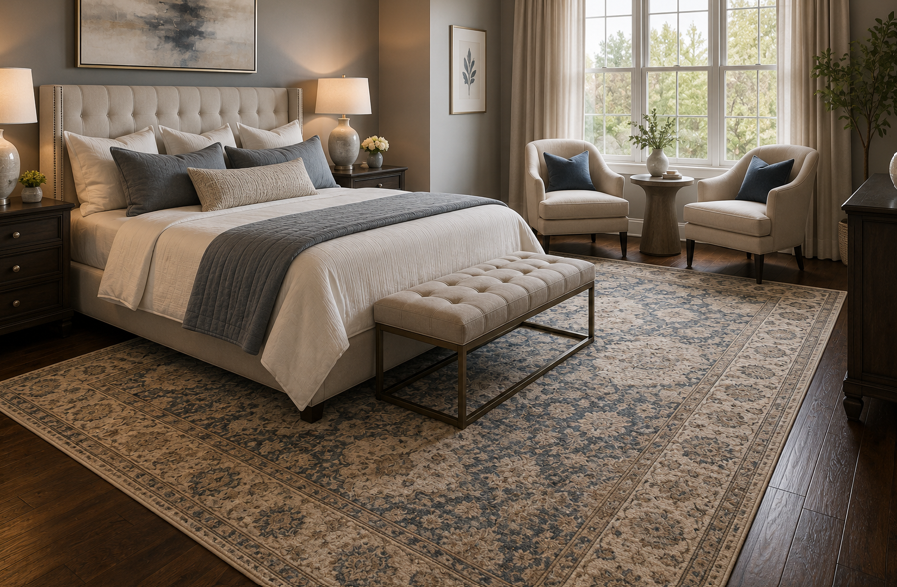
A bedroom is more than a place to sleep. It is where the day starts, where you unwind at night, and often the one room in the house where comfort matters more than almost anything else. Flooring plays a big role in that feeling, but you do not always need to replace the floor to make the room warmer, softer, or more inviting.
The right area rug can change the entire atmosphere of a bedroom. It can soften hard flooring underfoot, introduce color and texture, connect furniture, and make a larger room feel more complete. In smaller bedrooms, the right rug can add personality without taking over the space.
For Brookfield homeowners looking for flooring and rug solutions backed by more than 27 years of experience, NPN Flooring provides personalized service, quality products, custom area rug options, and professional flooring expertise.
So, what type of rug works best in a bedroom? There is no single answer because the right choice depends on your flooring, furniture, design style, comfort preferences, and how you use the room. These options are a practical starting point for finding an area rug that helps your bedroom look polished and feel comfortable.
1. Plush Area Rugs for a Softer Start to the Day
If comfort is your top priority, a plush rug is one of the most natural choices for a bedroom.
Bedrooms generally experience less foot traffic than entryways, kitchens, or family rooms, which gives homeowners more freedom to choose softer textures. A plush surface can make getting out of bed in the morning feel more comfortable, especially when the bedroom has hardwood, laminate, luxury vinyl, tile, or another hard-surface floor.
Why Plush Rugs Work Well in Bedrooms
The appeal comes from texture. A soft rug introduces a layer of comfort into a room filled with harder surfaces such as wood furniture, flooring, glass, and metal fixtures.
Plush rugs can also help a bedroom feel visually warmer. Even when the color palette is simple, added texture makes the space feel more layered and finished.
They can work particularly well:
Beside the bed
Under the lower portion of the bed
In a reading area
Near a bedroom bench
In larger primary bedrooms with open floor space
Keep the Overall Design Balanced
If the room already includes heavily textured bedding, upholstered furniture, layered pillows, and detailed window treatments, consider a plush rug with a quieter design.
If the rest of the bedroom is simple, the rug can bring in a little more color or pattern.
The goal is to create comfort without making every surface compete for attention.
2. Neutral Area Rugs for Calm, Flexible Bedrooms
Neutral area rugs are a strong choice when you want the bedroom to feel calm and easy to coordinate.
Colors such as cream, beige, taupe, soft gray, warm brown, and similar tones can work with a wide variety of furniture and flooring finishes. They are especially useful if you like changing bedding, artwork, or decorative accents throughout the year.
Why Neutral Does Not Mean Plain
A neutral rug can still have plenty of visual interest.
Look for details such as:
Subtle patterns
Variations in tone
Textured surfaces
Borders
Woven effects
Gentle geometric designs
These elements can keep the rug interesting while maintaining a peaceful overall look.
For example, a cream rug with soft tonal variation can brighten a bedroom with dark furniture. A warm beige or taupe rug can complement medium-toned hardwood or laminate flooring. Soft gray can work beautifully in rooms with cooler finishes.
A Good Foundation for Changing Décor
Bedrooms often evolve without a full redesign. You may replace bedding, repaint the walls, change curtains, or add new artwork while keeping the main furniture and flooring.
A versatile neutral rug gives you flexibility because it can continue working as the room changes.
Rather than trying to match every color exactly, choose a neutral tone that relates to the room’s permanent features, particularly the flooring and larger furniture pieces.
3. Patterned Area Rugs for Bedrooms That Need Personality
Some bedrooms have all the right furniture but still feel unfinished. A patterned rug can be the element that gives the room a stronger personality.
Patterns are particularly effective when the walls, bedding, and furniture are relatively simple.
Let the Rug Add Visual Interest
A patterned rug can introduce:
Geometric shapes
Organic designs
Traditional-inspired motifs
Abstract patterns
Stripes
Subtle repeating designs
The right pattern depends on the character of the room.
A clean geometric pattern may complement contemporary furniture, while a more detailed design can add richness to a traditional interior. An abstract pattern can work well in a transitional bedroom that mixes classic and modern features.
Pay Attention to Other Patterns
Before choosing a bold rug, look at the rest of the bedroom.
If your bedding already has a strong print, the curtains are patterned, and the wallpaper is detailed, another dominant pattern may make the room feel busy.
In that situation, a subtler rug may provide better balance.
If the room is mostly solid colors, however, the rug has more room to become a visual feature.
One practical approach is to vary pattern scale. Smaller patterns on bedding can pair well with a larger, more open rug design, helping each element remain distinct.
4. Low-Profile Area Rugs for a Clean, Streamlined Look
Not every bedroom needs a thick or plush rug. A lower-profile area rug can be an excellent option when you prefer a cleaner, more streamlined interior.
These rugs can add color, design, and softness without creating a heavily layered appearance.
Where Lower-Profile Rugs Make Sense
They can be especially useful:
Near frequently opened doors
In bedrooms with minimalist furniture
Under certain furniture arrangements
In compact rooms
Where you prefer a more tailored visual style
Their more restrained profile can work naturally in contemporary or transitional bedrooms.
Use Texture to Keep the Room Interesting
A lower-profile rug does not have to feel visually flat.
Subtle woven details, small-scale patterns, tonal color changes, and understated borders can give the rug depth without creating a highly textured surface.
If the bedroom already has a plush upholstered headboard, layered bedding, decorative cushions, or soft drapery, a simpler rug can also create contrast with those materials.
5. Custom Area Rugs for Bedrooms With Unique Layouts
Standard rug options work well for many bedrooms, but some spaces call for a more personalized solution.
Maybe the bed sits slightly off-center because of windows or door placement. Perhaps your primary bedroom includes a sitting area, unusual floor dimensions, or a furniture arrangement that does not work naturally with standard rug proportions.
A custom area rug can provide more control over how the rug fits the room and supports the overall design.
Why Consider a Custom Rug?
Customization can be helpful when you want to coordinate:
Rug dimensions
Shape
Edging
Flooring color
Existing furniture
Room layout
Overall design style
It can also be a practical way to create a rug that feels intentional rather than trying to force a standard option into a space where it does not quite belong.
NPN Flooring offers custom area rugs along with area rug and carpet binding services, giving Brookfield homeowners another way to create a finished look suited to their specific space.
If you are comparing styles for your bedroom, browse the available area rugs to explore options that can work with different flooring materials and interior designs.
6. Warm-Toned Area Rugs for a Cozy Bedroom Atmosphere
Color has a strong influence on how a bedroom feels.
Warm shades can make a room feel inviting, especially when paired with wood flooring, warm furniture finishes, or soft lighting.
That does not mean the rug has to be bright red or orange. Warmth can be introduced through much subtler colors.
Consider Warm, Natural-Looking Shades
Depending on the rest of your room, options might include:
Warm beige
Soft brown
Muted rust
Terracotta-inspired tones
Cream
Taupe
Warm gray
These colors can complement the natural character of wood and wood-look flooring while giving the bedroom a comfortable visual foundation.
Look at the Room’s Undertones
A helpful way to choose a rug is to look beyond the main color and consider whether the room feels predominantly warm or cool.
For example, brown furniture with golden undertones may pair more naturally with warm neutrals than with a distinctly cool gray. Flooring with cooler undertones may work better with soft gray, muted blue, or cooler beige shades.
These are not rigid rules. What matters is whether the colors feel connected when viewed together.
7. Light-Colored Rugs for a Bright, Airy Bedroom
If you want your bedroom to feel open and bright, a lighter area rug can support that effect.
Cream, ivory, pale beige, light gray, and other soft shades reflect more visual light than deeper colors, making them especially appealing in bedrooms where you want a relaxed, airy atmosphere.
Pair Light Rugs With Dark Furniture
Contrast can make both the rug and furniture look more defined.
If your bedroom includes a dark wood bed frame, dresser, or nightstands, placing a lighter rug nearby can prevent the darker pieces from making the space feel visually heavy.
The same idea can work over darker hardwood or laminate flooring.
Keep the Entire Palette in Mind
A light rug does not automatically create a lighter-feeling room if every other element is dark and visually heavy.
Think of it as one part of a larger combination that includes:
Wall color
Bedding
Window treatments
Furniture
Flooring
Lighting
A light rug can help create balance within that combination rather than carrying the whole design alone.
8. Darker Area Rugs for Depth and Contrast
Light rugs are not the only option for bedrooms. Deeper colors can add sophistication, definition, and visual depth.
A darker rug may work particularly well in a room with pale flooring, light walls, or neutral furniture.
Create a Stronger Visual Foundation
Colors such as charcoal, navy, deep brown, or other rich tones can ground a room and give lighter furniture more definition.
For example, a bedroom with pale flooring and cream furniture may gain more depth from a rug with a stronger tone.
Darker rugs can also work nicely when the overall design is intentionally cozy or dramatic.
Avoid Making the Room Feel Too Heavy
Balance is especially important when using deeper colors.
If the flooring, furniture, walls, and rug are all very dark, the room may lose contrast. Consider balancing a darker rug with lighter bedding, walls, curtains, or upholstery.
The goal is to let the darker rug add depth rather than dominate the entire bedroom.
9. Textured Area Rugs for Simple Bedroom Designs
Sometimes a bedroom does not need additional color or pattern. It needs texture.
A textured area rug can make a simple room feel more finished without dramatically changing the color palette.
Add Depth Through Surface Variation
Texture can be particularly effective in bedrooms with:
Solid-color bedding
Smooth furniture finishes
Simple walls
Hard-surface flooring
Minimal decoration
In these spaces, the rug can provide visual and physical softness while keeping the design restrained.
Let Materials Complement One Another
Consider how the rug texture relates to other bedroom materials.
A room with smooth wood flooring and simple furniture may benefit from a softer or more pronounced rug texture. A bedroom already filled with velvet, heavy upholstery, layered fabrics, and textured bedding may work better with a quieter rug surface.
There is no need for every material to match. Contrast between surfaces is often what makes an interior feel layered and intentional.
10. Area Rugs That Complement Hardwood or Wood-Look Floors
Brookfield bedrooms with hardwood, laminate, or other wood-look flooring already have strong visual character. The rug can work with that character rather than hiding it.
Use Contrast to Let Both Surfaces Stand Out
Consider how the rug color relates to the floor.
A light rug can create definition over dark wood tones. A medium or deep rug can add contrast over lighter flooring. If the floor has noticeable grain and color variation, a simpler rug may allow the flooring and rug to complement each other without competing.
Consider the Furniture Finish Too
Many bedrooms include wood flooring and wood furniture at the same time.
If the floor and furniture are similar in tone, a rug can create separation between them. This might mean choosing a lighter neutral, a contrasting color, or a pattern that introduces additional shades.
Rather than trying to find a rug that exactly matches the wood, use the rug to connect the floor, furniture, bedding, and wall colors.
11. Accent Rugs for Smaller Bedroom Areas
A bedroom does not always need one large rug to benefit from softness and style.
Smaller accent rugs can work well when you want to highlight a particular part of the room.
Useful Spots for an Accent Rug
Consider placing one:
Beside the bed
In front of a dresser
Near a reading chair
At the foot of the bed
In a dressing area
This approach can be useful when you love the flooring and want to keep most of it visible while adding comfort where it matters most.
Keep Multiple Elements Connected
If you use more than one rug or combine an accent rug with other strong textiles, look for a common design thread.
That might be:
A repeated color
Similar texture
Related pattern style
Matching undertones
A shared overall mood
The rugs do not need to be identical. They simply need to feel like they belong in the same bedroom.
How to Narrow Down the Best Bedroom Rug for Your Home
With so many options available, choosing a rug becomes easier when you focus on a few practical questions.
Before making a decision, look around the bedroom and consider:
What colors already appear in the room?
Is the flooring light, medium, or dark?
Does the room already contain strong patterns?
Do you want the rug to blend in or become a focal point?
Would more texture improve the space?
Does the bedroom feel warm, cool, traditional, modern, or somewhere in between?
Which areas would benefit most from softness underfoot?
Will the rug work with furniture and décor you plan to keep?
It also helps to prioritize the room’s permanent features. Flooring, a bed frame, built-in storage, and major furniture may remain for years, while bedding and accessories can change more easily.
A rug that connects with those long-term elements gives you more freedom to update the bedroom later.
Find an Area Rug That Makes Your Brookfield Bedroom Feel Complete
The best bedroom rug is not simply the softest, brightest, or most decorative option. It is the rug that works naturally with your flooring, furniture, color palette, room layout, and personal style.
A plush rug can add comfort. A neutral rug can create flexibility. Patterns can bring personality to understated interiors, while texture can add depth without introducing more color. Custom rugs can help with unique bedroom layouts, and well-chosen light or dark tones can create the contrast a room needs.
Before choosing, look at the bedroom as one complete design rather than evaluating the rug on its own. When the flooring, furniture, textiles, and rug support one another, the room tends to feel more polished and intentional.
NPN Flooring has served families for more than 27 years with a commitment to quality craftsmanship, personalized service, and careful attention to each project. Services include custom area rugs, area rug binding, carpet binding, flooring installation, flooring repairs, and free in-home estimates.
If you would like help choosing an area rug that works beautifully with your Brookfield bedroom, get in touch with NPN Flooring for personalized guidance.


